
CCG EDA Disaster Recovery Grant Guide
CCG Highlights $1.45 Billion in Disaster Recovery Grants
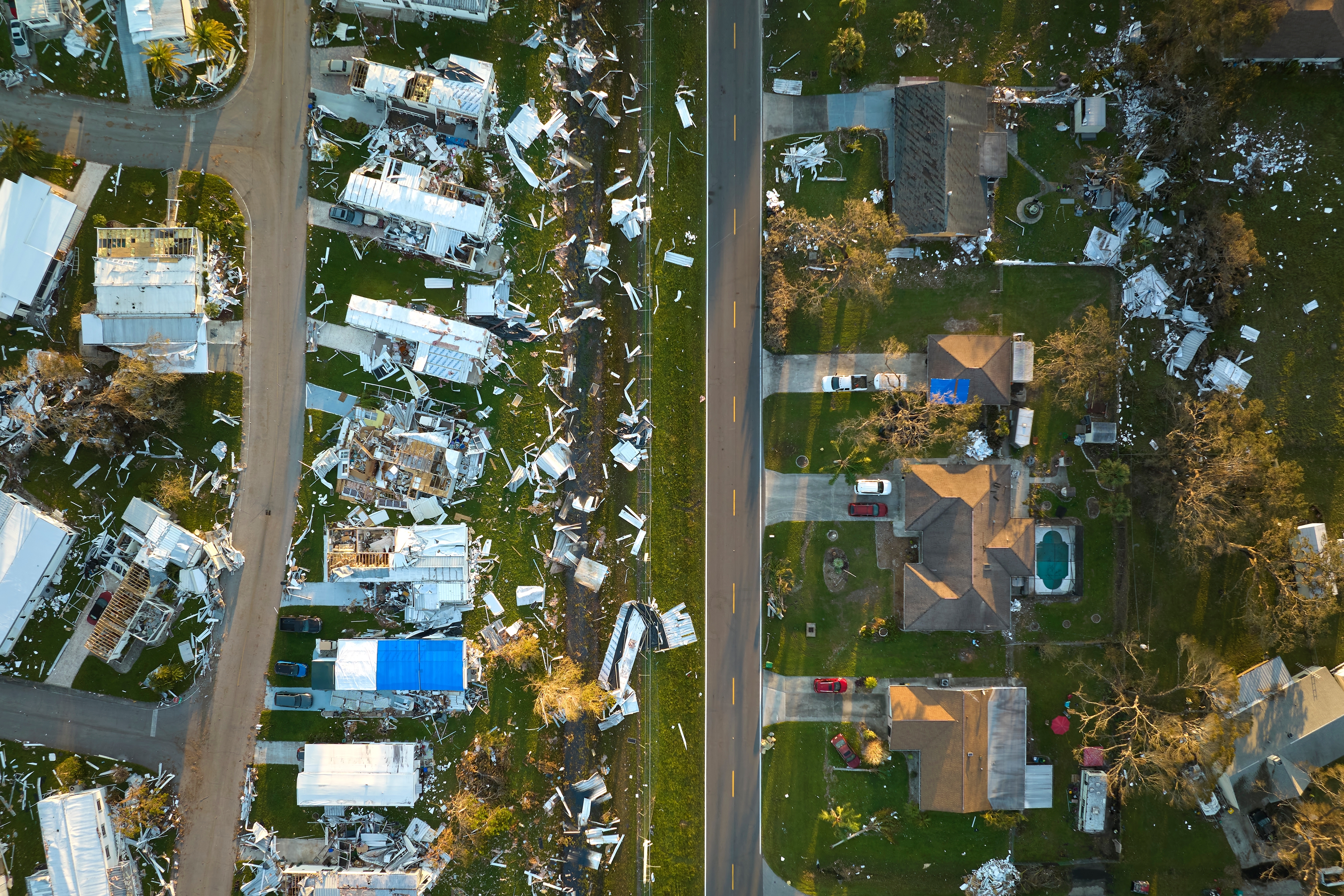
The Economic Development Administration (EDA) has issued a Notice of Funding Opportunity (NOFO) for the Disaster Supplemental Grant Program and is currently accepting applications to support recovery and long-term resilience projects for areas impacted by major disasters in 2023 and 2024.
Congress appropriated $1.45 billion in disaster recovery grant funding for state, local, territorial, and tribal governments, economic development districts, institutions of higher education, and qualified non-profits to advance the recovery and resilience of their community, economy, and infrastructure through the program. This is the largest disaster recovery appropriation in EDA history, and it represents a unique opportunity for disaster-impacted communities to leverage additional federal funding for recovery and resilience investments.
Application Deadlines
There are three grant pathways, each with different objectives and estimated award ranges (described below). Readiness Path and Implementation Path grant applications are currently being accepted on a rolling basis, but communities should apply as soon as possible to be considered before the budget is exhausted. Applications for Industry Transformation grants are due by March 3, 2026.
CCG Capabilities
Civix Consulting Group (CCG) specializes in disaster recovery planning, community and infrastructure resilience, and management and administration of federal grants, and our experts are available to support applicants in all three program pathways both pre- and post-award.
- CCG has developed Disaster Recovery Plans funded and approved by numerous federal agencies for communities throughout the United States to identify damages, unmet needs, risks, and potential impacts; identify, evaluate, prioritize, and implement qualified projects; and provide management, oversight, and coordination of efforts among the various stakeholders and agencies involved.
- CCG has also supported numerous state and local governments with Project Implementation and Oversight for the types of investments in community and infrastructure resilience these grant funds are designed to support.
Program Overview
1. Readiness Path (Estimated Award Range: $250,000 – $500,000)
This pathway is designed for communities in the early stages of recovery that need to build local capacity in regions impacted by disasters before starting major construction by focusing on strategic planning, feasibility studies, and hiring disaster recovery coordinators. Readiness projects are non-construction projects which might include:
- Creating or updating economic recovery strategies
- Hiring disaster recovery subject matter experts and practitioners
- Paying for pre-development costs that are critical to subsequent project implementation
Readiness Path projects have an anticipated Period of Performance of 12-18 months and a cost-share of 20% (with some exceptions).
2. Implementation Path (Estimated Award Range: $2M – $20M [construction]; $100K – $5M [non-construction])
This pathway funds individual projects that directly rebuild or upgrade community infrastructure to support long-term recovery and growth. The main focus of these grants is construction projects to improve the resilience of infrastructure such as water/wastewater systems, drainage systems, roads and bridges, as well as non-construction projects such as workforce development initiatives. Implementation Path projects have an anticipated period of performance of 12-48 months and cost-share of 20%.
3. Industry Transformation Path (Estimated Award Range: $20M – $50M)
This pathway is intended for large-scale regional coalitions looking to fundamentally shift or accelerate a specific industry following a disaster. These projects will involve portfolios containing multiple construction and non-construction projects led by a regional coalition. Industry Transformation Path projects have an anticipated Period of Performance of 12-48 months and cost-share of 20%.
Ineligible Uses
Some projects are generally ineligible under the Disaster Supplemental NOFO, including projects that:
- Are primarily residential in nature (e.g. housing)
- Create community amenities (e.g. swimming pools, zoos, or recreational centers)
- Support casinos or gaming
- Support general governmental functions (see 2 CFR 200.444)
- Supplement operating budgets or replace lost revenue (including lost tax revenue)
Application Development
To qualify for these funds, applicants must submit an application via EDA’s EDGE portal or Grants.gov.
CCG can assist customers during the pre-award phase by:
- Identifying and prioritizing eligible projects through planning and strategy development, capacity building, and project pre-development
- Engaging stakeholders and decision makers to build consensus and support
- Preparing the Impact and Engagement Narrative (e.g. quantified disaster damages and economic impacts, capacity constraints, project feasibility, community engagement strategy, budget narrative, measurable project outcomes, and measurable community readiness benefits)
- Ensuring project consistency with the community’s Comprehensive Economic Development Strategy (CEDS), Hazard Mitigation Plan (HMP), and other relevant plans (as applicable)
- Assembling the required project and financial documentation
- Checklist and quality control review of the completed package
- Application submission
Project Implementation
CCG can assist customers during the post-award phase by:
- Leading disaster recovery planning efforts under the Readiness Path
- Providing staff training and capacity building under the Readiness Path
- Providing project development, technical assistance, procurement oversight, monitoring, compliance, inspections, and reporting for projects selected under the Implementation Path
Timeliness
The EDA’s website states that “while applicants are not required to seek Readiness Path funding before applying under other Paths, EDA strongly encourages prospective applicants for these types of economic recovery grants to prioritize submitting these applications as early as possible, ideally prior to applying for other economic recovery assistance (whether from EDA or otherwise). Leveraging these awards during the initial phase of local and regional economic recovery work can position applicants and the communities they serve to successfully leverage and manage Federal and other economic recovery resources.”
Contact Us
Contact CCG today to take advantage of this opportunity and learn how we can help your organization to apply for and administer planning and project funding through the EDA Disaster Recovery Grant Program.
CONTACT
Need a Consultation?
Contact our team today to learn more.